Choosing sugar free biscuits for diabetics can feel confusing when almost every packet in the grocery aisle claims to be healthy or guilt-free. A bold label on the front does not always mean a biscuit is gentle on your blood sugar. Learning how to read the ingredient list and nutrition panel makes it much easier to pick a tea-time snack that genuinely fits your routine.
Removing white sugar is only one part of the picture. Many people turn to the web for clear answers about packaged foods, and we focused on thoughtful search engine optimization so this guide is easy to find when you need honest label-reading advice. Below is a practical breakdown of what “sugar-free” really means, which ingredients work better, and how to enjoy biscuits mindfully. Because everyone manages blood glucose differently, always check with your doctor or a qualified dietitian before changing your diet.
What “Sugar-Free” Really Means on a Biscuit Pack
When a biscuit pack says “sugar-free” or “no added sugar,” it usually means refined white table sugar (sucrose) was left out. It does not mean the biscuit is free of carbohydrates or calories. Even low sugar biscuits still contain starch from flour, which your body breaks down into glucose during digestion.
How fast a snack raises blood glucose depends largely on the glycemic index of foods, which measures how quickly carbohydrate-containing foods affect blood sugar levels. A biscuit made from refined white flour can still cause a rapid rise even with zero added sugar. That is why flour choice, fiber, and portion size matter just as much as the sweetener.
What to Check on the Label Before Buying Sugar Free Biscuits for Diabetics
Front-of-pack claims are marketing; the back of the pack tells the real story. Before buying any biscuit box, check these six details:
- The first ingredient: Ingredients are listed by weight. If refined wheat flour (maida) is first, the biscuit is mostly fast-digesting starch.
- Total carbohydrates per serving: Look past the “added sugars” line. Total carbohydrates show the overall carb load your body will process.
- Dietary fiber: Higher fiber slows digestion and supports a steadier release of glucose into the bloodstream.
- Sweetener type: Look for the exact sweetener—such as stevia, monk fruit, dates, or sugar alcohols—rather than vague phrases like “natural sweeteners.”
- Fats and additives: Avoid partially hydrogenated oils (trans fats) and long lists of artificial preservatives, colors, or flavorings.
- Serving size: Nutrition panels often list values for just one or two biscuits. Adjust the numbers if you eat more.

Ingredients That Work Better in Diabetic-Friendly Biscuits
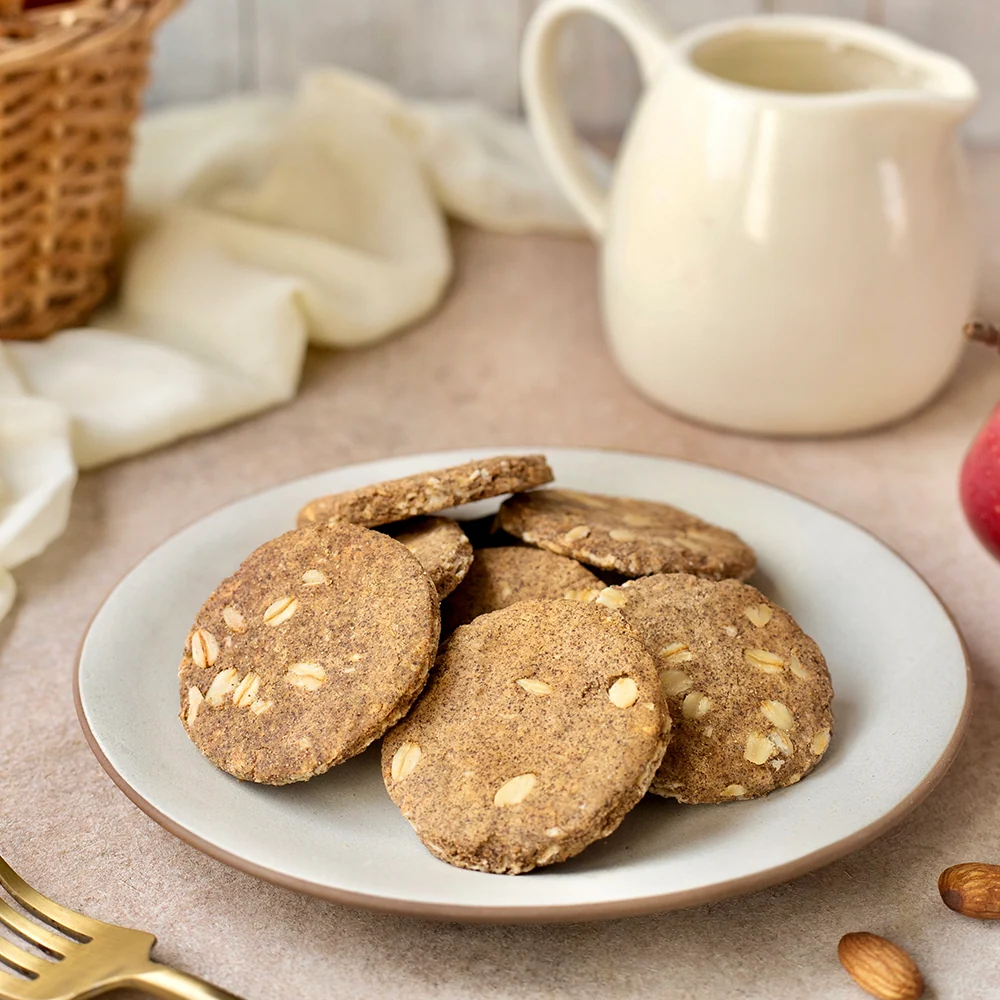
The best sugar free biscuits rely on whole, nutrient-dense ingredients rather than simply swapping sugar for a synthetic additive. Better base flours include ragi (finger millet), oats, and almond flour. Ragi and oats add dietary fiber that slows digestion, while almond flour is naturally lower in carbohydrates and provides healthy fats and protein.
Sweeteners matter just as much. Plant-based non-nutritive sweeteners like stevia and monk fruit provide sweetness without adding calories or raising blood glucose. Some bakers also use dates in small amounts; dates still contain natural sugars and affect blood glucose, but they bring fiber and trace minerals compared to refined sugar, so portion control remains key.
For example, at The Balloon Whisk—a Pune home bakery started in 2021 by Meera Deshpande, a nutritionist with a postgraduate diploma in clinical nutrition—small-batch bakes like sugar-free digestive biscuits and ragi cookies use flours such as ragi, oats, and almond flour alongside stevia, monk fruit, or dates, with no artificial preservatives. Looking for short, recognizable ingredient lists is a dependable habit wherever you shop.
Ingredients to Limit or Avoid
Even packs labeled as sugar free biscuits for diabetics can contain ingredients that work against steady blood sugar. Watch out for refined wheat flour (maida), which lacks fiber and digests quickly.
Also avoid hidden syrups and fillers like maltodextrin, liquid glucose, invert sugar syrup, and dextrose, which can raise blood sugar rapidly. Large amounts of certain sugar alcohols such as maltitol can still raise blood glucose and may cause bloating or stomach discomfort. Finally, avoid partially hydrogenated oils, as trans fats are linked to poor heart health.
Simple Everyday Tips for Enjoying Biscuits Mindfully
Better ingredients work best alongside simple daily habits. Keep portions modest—one or two biscuits with unsweetened tea or coffee is usually a sensible serving, since even sugar free biscuits for diabetics add carbohydrates and calories.
Pair your biscuit with a small source of protein or healthy fat, like a handful of unsalted almonds, walnuts, or plain curd. Protein and fat slow digestion and help steady post-meal blood sugar. If your doctor advises glucose monitoring, checking your response after trying a new biscuit helps you see what works for your body.

Frequently Asked Questions
Are sugar-free biscuits safe for diabetics?
Sugar-free biscuits can fit into a balanced diabetes meal plan if you check the nutrition label and control portion sizes. Because “sugar-free” only means no added table sugar, biscuits made with refined flour or high total carbohydrates can still raise blood glucose. Always consult your doctor or dietitian to confirm what suits your health goals.
Which biscuits are best for diabetics?
Biscuits made with high-fiber whole grains, millets like ragi, oats, or lower-carb almond flour are generally better choices than refined-flour biscuits. Look for low sugar biscuits with higher fiber, minimal saturated fat, and no trans fats or artificial preservatives. Comparing total carbohydrates per serving makes choosing much easier.
What are the best sugar-free biscuits for diabetics?
The best sugar free biscuits for people managing diabetes combine fiber-rich or nut-based flours with non-spiking sweeteners like stevia or monk fruit. Whole-grain digestive biscuits, oat biscuits, and almond-flour biscuits with clean ingredient lists generally offer a steadier energy release than heavily processed options. Always review the full nutrition panel and eat them in moderation.
Final Thoughts
Choosing sugar free biscuits for diabetics becomes much simpler once you know how to read a label. Focus on whole-grain or nut flours, higher fiber, transparent sweeteners, and sensible portions, and speak with your doctor or clinical nutritionist for personal dietary advice. If you want to explore small-batch, baked-to-order options made with ragi, oats, almond flour, and no artificial preservatives, visit The Balloon Whisk.